Porthole: Second Glance – CIRC&LOV
Submitted by: Ulrike Acker-Thomsen
Supplier: CIRC&LOV
Found onboard: Hapag-Lloyd Cruises – HANSEATIC Spirit
PORTHOLE – SECOND GLANCE reimagines what happens after a cruise ship’s furniture is decommissioned — as a design opportunity in its own right and brings a new object back on board.
The concept grew out of a donation of table tops from the expedition ship HANSEATIC spirit, on their way out of service. Rather than treating them as a single material to recycle or discard, CIRC&LOV analysed the table top´s construction and found two different components fused into one object — a solid, precision-milled hardwood ring, and a lower-grade centre panel (plywood with faux leather) that had served its purpose and was quite worn down. So we focussed on the hardwood ring for the new design.
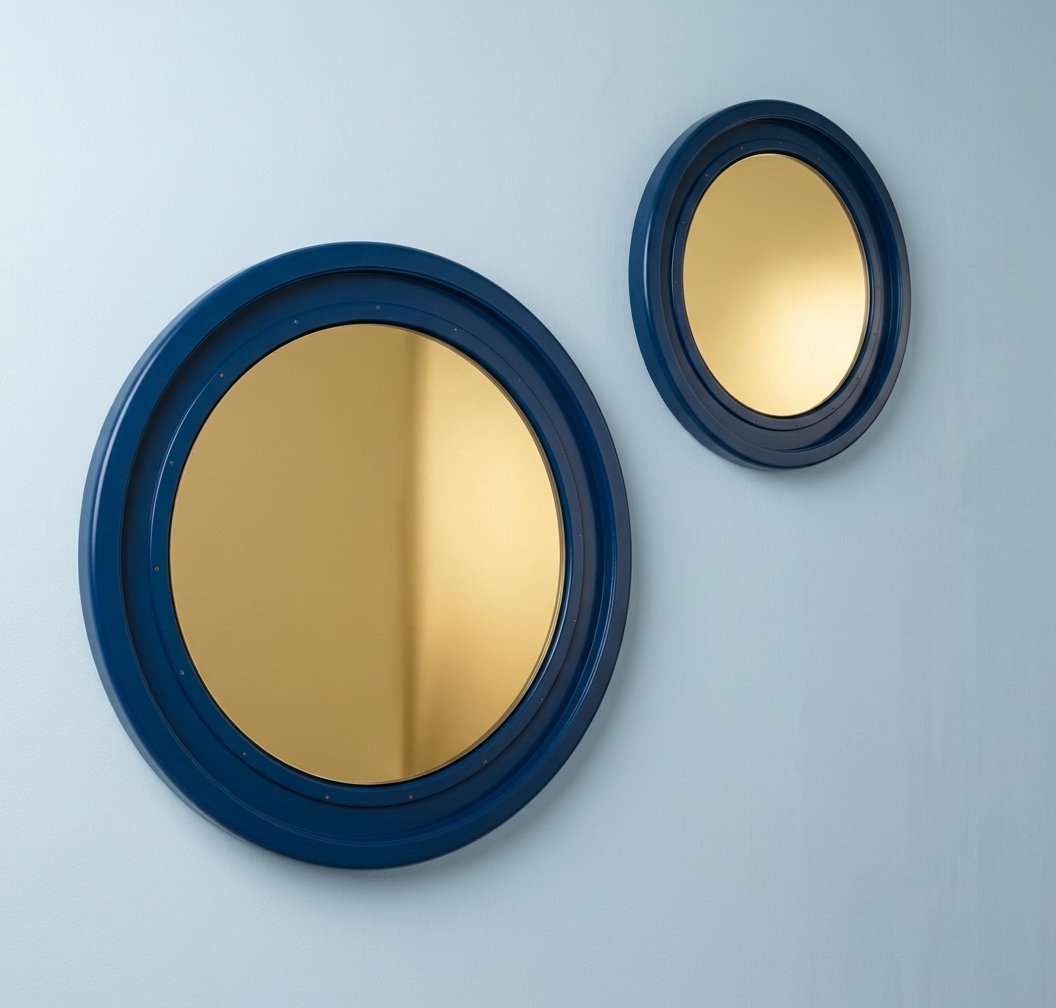
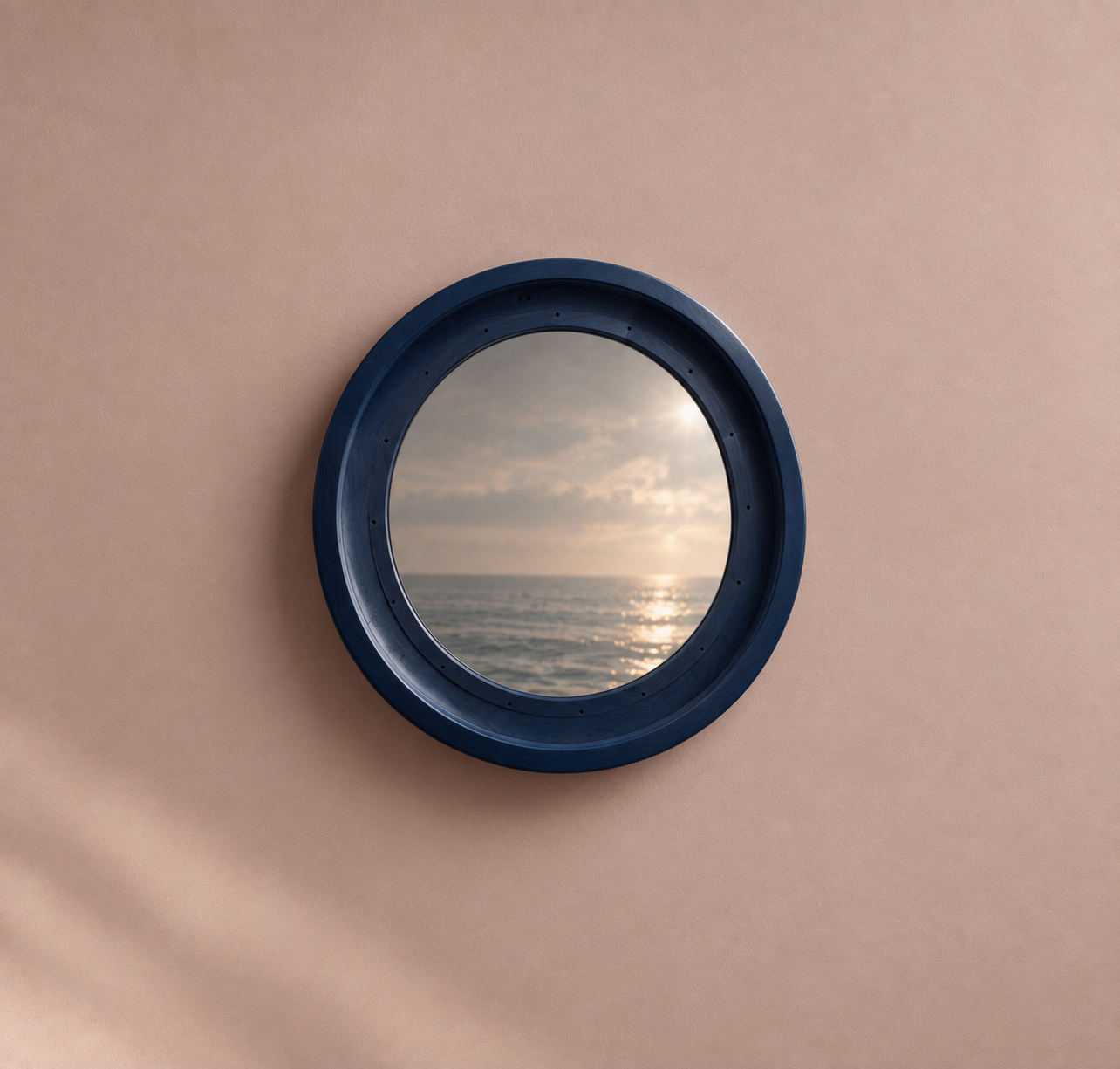
Sanded back and refinished with a sustainable, water-based coating that preserves the natural grain, the reclaimed rings become the frame for a new object: a wall mirror that reads unmistakably as a porthole. Two readings of the same form are proposed.
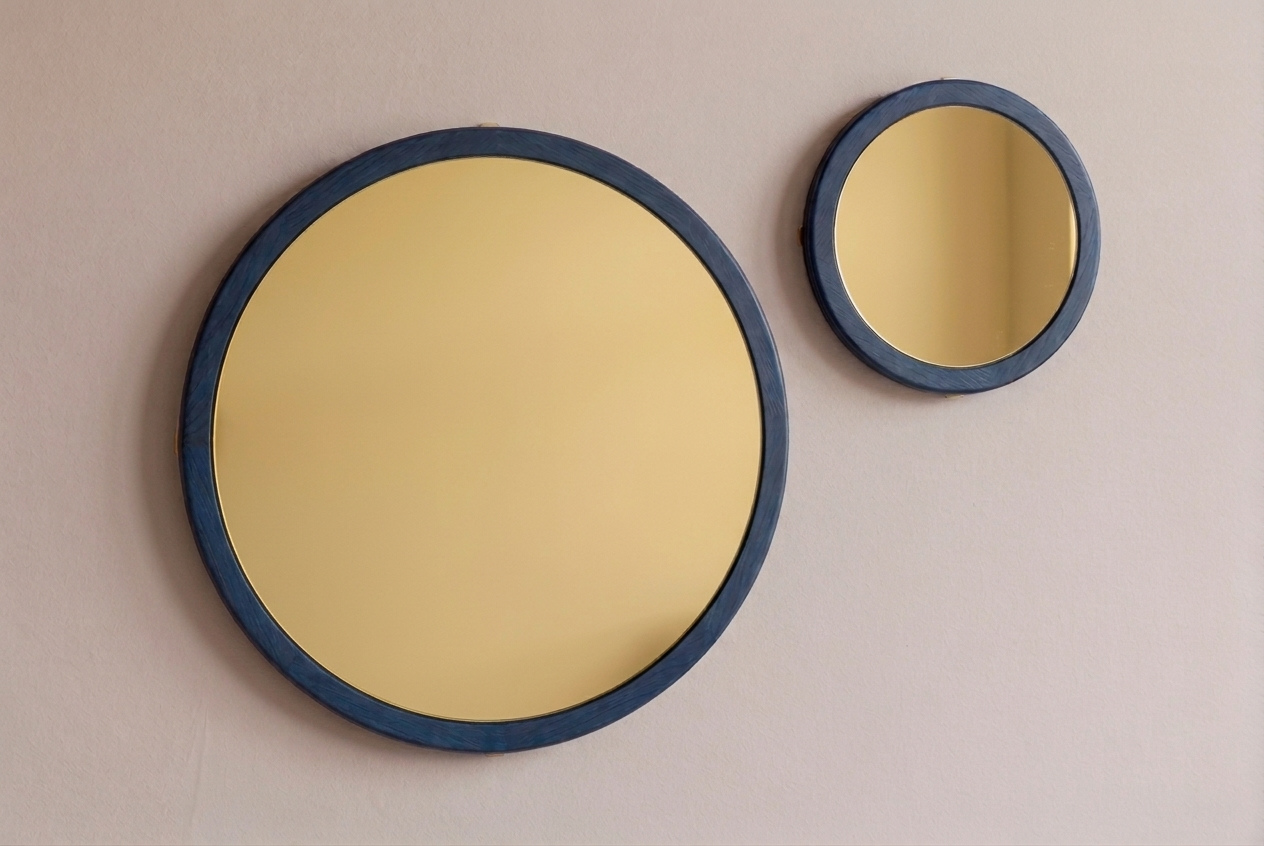
The first is deliberately decorative — a tinted, iridescent mirror surface that softens reflection in favour of atmosphere, letting the object function as a piece of maritime memory on the wall rather than a functional mirror. This option reads as a memory and decorative object.
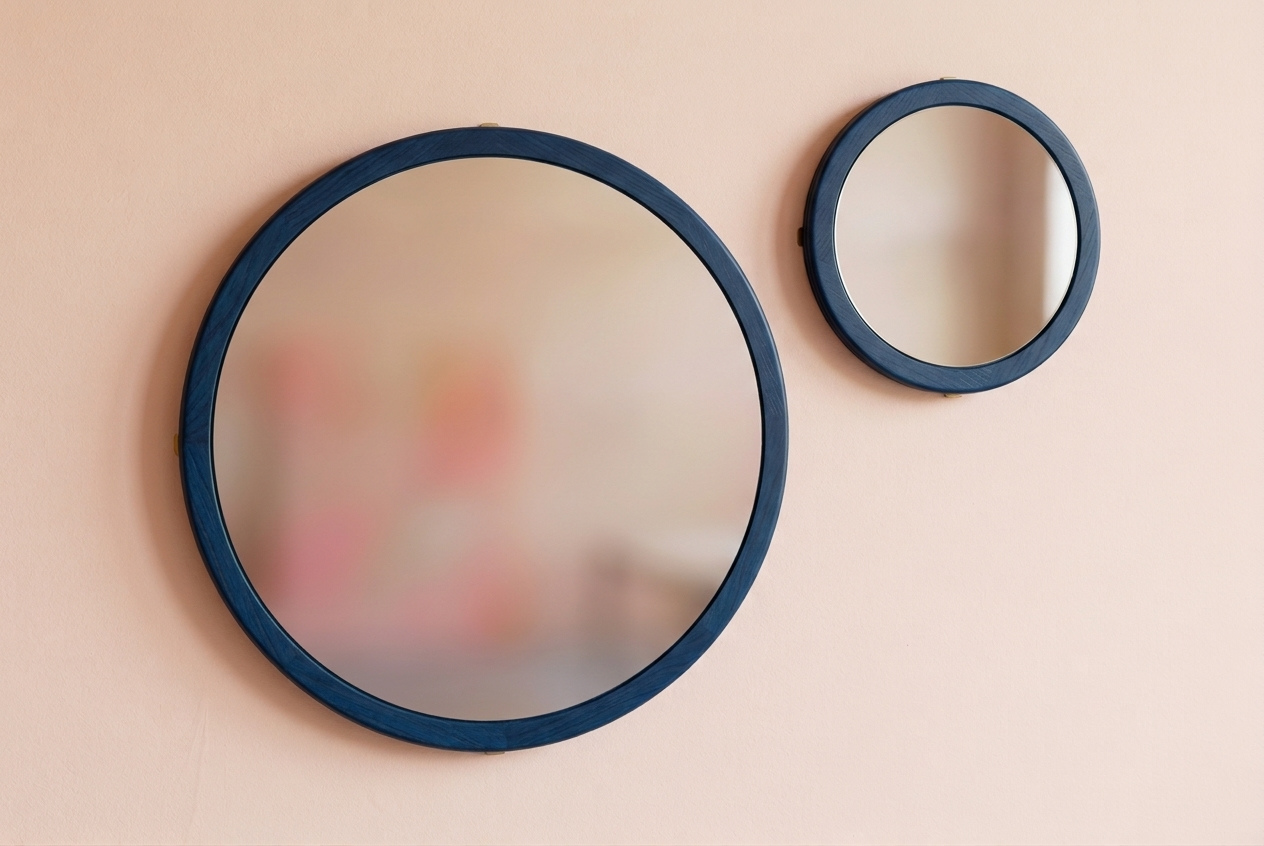
The second is a clear-glass, fully functional mirror, sized and detailed for the space-constrained reality of a small cabin. This option turns into a new useable, functional object ready for a new life on board.
Across the full material donation — large table tops (diameter 69 cm) and smaller table tops (diameter 44 cm) — PORTHOLE proposes a family of objects rather than a single product, scaling from statement piece to practical fitting without leaving the design language behind.
What makes PORTHOLE a concept rather than a conventional upcycling exercise is the discipline behind it: nothing is kept because it is available: only the one element worth keeping is refined, and given a second life that references its origin honestly. It is a proposal for how the cruise industry’s own decommissioning stream — usually invisible once a ship leaves service — can become a visible, desirable source of design, developed in direct collaboration with the cruise line whose ship the material came from. Referring to its origin it is turned into a design object that can be installed on the same or a different ship, and of course also ashore.